Free masterclass · AI for e-commerce
How to grow an online store with AI: more buyers, more orders, more profit.
Running a Shopify, WooCommerce or any other online store? This free masterclass shows how the three parts of a store link up, the numbers that run each one, and where AI does the work, with the free and paid e-commerce courses that build each part.
- Turn visitors into buyersThe buyer journey, the conversion funnel and the six front-end sales engines.
- Bring in more buyersContent, ad creative and email built as repeatable pipelines, not blank chats.
- Keep more of every saleWhere the money goes, what discounts really cost, and stock that never runs out.
Watch: an introduction to AI for e-commerce, by David Tainsh.
The example store in the video uses £. The numbers work the same in any currency.
What kind of store do you run?
One playbook for every kind of online store.
What you sell changes. How visitors become buyers, how marketing brings them in and how the back end protects your profit works the same way, on any platform.
Shopify
Grow a Shopify store
Product pages, apps, checkout and email flows that turn more visitors into orders.
WooCommerce
Grow a WooCommerce store
The same funnel, sales engines and pipelines, built on WordPress.
Starting out
Start an online store
Know the numbers before you spend on ads: conversion rate, order value and margin.
DTC brands
Direct-to-consumer brands
Pages, ads and emails written in your customers’ own words, in one brand voice.
Subscriptions and repeat
Repeat-purchase products
Replenishment and win-back flows that bring customers back on time.
Freelancers and agencies
Working on client stores
A repeatable way to find a client store’s biggest leak and fix it with AI.
What the masterclass covers
How to grow an online store with AI, in five parts.
Every idea comes with a diagram, and every term is explained the first time it appears.
- 01How AI fits into an online store
Your store’s files go in, Claude drafts, you check and decide. Why a saved pipeline beats a blank chat every time.
- 02The front end: turn more visitors into buyers
The buyer journey, the conversion funnel, and six sales engines from product pages to abandoned-cart recovery.
- 03Marketing pipelines: bring in more buyers
Content for Google and AI search, ad creative you can test, and six automated email and SMS flows.
- 04The back end: keep more profit from every sale
Where the money from one order goes, what a discount really costs, stock, suppliers and customer service.
- 05Where to go next
The free and full courses that build each part of your store with AI.
Start with the numbers
Revenue comes from three numbers.
Marketing brings the visitors. The front end controls the other two: how many visitors buy, and how much they spend.
Visitors×Conversion rate×Average order value=Revenue
| Example store | Visitors | Conversion rate | Order value | Revenue |
|---|---|---|---|---|
| Starting point | 10,000 | 2.0% | $60 | $12,000 |
| Conversion rate rises | 10,000 | 2.5% | $60 | $15,000 |
| Order value rises 10% | 10,000 | 2.0% | $66 | $13,200 |
| Both | 10,000 | 2.5% | $66 | $16,500 (+37.5%) |
Same visitors, same ad spend. But revenue is not profit: on a 40% margin, a 20% sale has to double your orders just to stand still.
The front end
Six sales engines that turn visitors into orders.
Each one moves conversion rate, order value, or both. Measure your funnel first, then fix the step that loses the most people.
Engine 1
Product pages
Copy and FAQs drafted from your product facts, with delivery and returns next to the button.
Engine 2
Search and navigation
Collections named the way customers search, and site-search terms read as free research.
Engine 3
Reviews and proof
Themes summarised across hundreds of real reviews, shown near the price.
Engine 4
Order value offers
Cross-sells, upsells, bundles and order bumps, each checked against your margin.
Engine 5
Cart and checkout
Every step audited for the missing information that makes buyers leave.
Engine 6
Recovery
An abandoned-cart sequence that reminds and reassures before it ever offers a discount.
How the courses work
One knowledge base feeds every pipeline.
Write your store’s facts once: catalogue, customer voice, brand voice and policies. Every course then runs the same five steps, so quality doesn’t depend on the day.
- 1Inputs
Your store files: products, reviews, policies and brand voice.
- 2AI drafts
Claude follows a saved prompt and reads the same files every time.
- 3You check
Facts, prices and claims against your files. Claude never invents a feature.
- 4Publish
To your website, ad account or email platform.
- 5Measure
Visits, clicks and orders from each asset, fed back in as new inputs.
Step 1 · Free
Free e-commerce courses to start with.
Three short lessons each, most with a live workshop, an SOP and Claude prompts. Start with the part of your store losing the most.
Start here · The whole store
AI E-Commerce Free Course
This masterclass’s three parts as three short lessons, built around diagrams: how marketing, conversion and operations link up, and where AI does the work.
FreeView course →
Customer research
The Buyer Intent Engine
A customer voice file, a pain dictionary, three personas and an intent matrix, built from your own reviews, support emails and searches.
FreeView course →
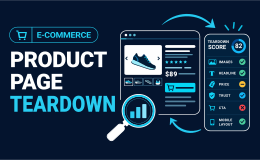
Part 1 · Engine 1
Product Page Teardown
Score one product page out of 10 on five pillars, find what buyers can’t see, and write the three fixes that matter most.
FreeView course →
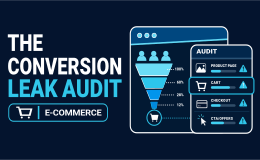
Part 1 · The funnel
The Conversion Leak Audit
Your five conversion numbers, a map of where visitors leave on phone and desktop, and a dollar value on each leak.
FreeView course →
Coming soon
Part 1 · Engine 6
Recover Your Abandoned Carts This Weekend
Three cart recovery emails, one SMS, and the consent rules for both.

Part 2 · Content
Get Found by AI Search
Rewrite a product page for AI search and add product schema that passes the test.
Step 2 · Full courses
Build each part of your store in full.
Each one is built in Claude from your own store’s data, with SOPs, prompts and live builds. The files from the free courses drop straight in, so nothing is built twice.
Part 1 · Product pages
AI Product Detail Pages
Product pages from your catalogue, reviews and policies: copy, FAQs, reviews, buy box and SEO.
$28.95View course →
Part 1 · Conversion
AI CRO For E-Commerce
Find and fix the conversion leaks from product page to checkout, one step at a time.
$28.95View course →
Parts 1 and 3 · Funnels
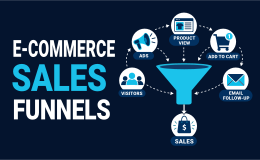
E-Commerce Sales Funnels
Low-ticket, subscription and high-ticket funnels, each set up to make a profit.
$28.95View course →
Part 2 · Email
AI Email Automation Blueprint
Consent, customer segments and the six lifecycle email flows, from welcome to win-back.
$28.95View course →
Step 3 · Flagship
The complete AI e-commerce system.
All three parts of the store, built with you, in one programme with lifetime access.
Quick answers
AI for e-commerce: common questions.
How can AI help an online store?
AI is good at the writing and sorting work a store runs on: product copy, review summaries, content pages, ad briefs, email flows, support replies and stock flags. It drafts from your store’s files, and you check and decide before anything goes live.
How do I increase my store’s conversion rate?
Measure each step of your funnel first: visits, product views, add-to-carts, checkouts and orders. Fix the step with the lowest rate, which is often the product page, then change one thing at a time. The free Product Page Teardown course is a good start.
What is a good conversion rate for e-commerce?
It varies by product, price and traffic source, so compare your store against itself month on month. The example store in the masterclass converts at 2%, and lifting that to 2.5% adds 25% more revenue from the same visitors.
Does it work with Shopify and WooCommerce?
Yes. The methods work on any platform. Shopify, WooCommerce and Google Analytics 4 all report the funnel numbers the courses use, and the prompts work from exports any platform can produce.
How do I know if my ads are making money?
Work out your break-even ROAS: 1 divided by your gross margin. At a 40% margin you need $2.50 back for every $1 of ads just to break even. The masterclass walks through the maths.
Will AI make things up about my products?
Not if it works from your files. Every course has Claude read your catalogue, reviews and policies, and every draft is checked against them before it goes live. AI never commits money or changes prices on its own.
How much do the e-commerce courses cost?
The starter courses are free. The four full courses are $28.95 each, and the complete AI For E-Commerce programme is $197. All come with lifetime access.
Which course should I take first?
The AI E-Commerce Free Course, which goes deeper into everything in this masterclass. Then pick the free course for the part of your store losing the most, and build it in full when you are ready.
Ready to grow your store? Start with the free course.
Three short lessons that go deeper into everything in this masterclass. Then pick the free course for the part of your store losing the most.
Start a free courseA Digital Plan · adigitalplan.com